Showing posts with label geography. Show all posts

Saturday, July 28, 2012

San Sebastián, Part 1

After a few hours of sleep on Friday night, I said goodbye to Madrid for good and left on a 5-hour train ride to San Sebastián to start my adventures. 


And it's a good thing I did, because when I said Granada was my favorite city in Spain, I was lying. San Sebastián is my favorite city in Spain

train

The second-class tickets for this particular train were sold out, but the first-class tickets only cost me 10 euros with a Eurail pass. The only difference as far as I could tell between first and second class on RENFE was that I got served the most delicious breakfast ever. 
Croissant, piece of bread, Greek yogurt, Spanish omlette, fried eggplant in tomato sauce, small white chorizo, tea, orange juice. And with the bread they gave us butter and jam and an adorable tiny 2-oz bottle of olive oil. 

hostel

Because I am staying in San Sebastian for two nights, I booked two nights in a hostel - The Hostel Lagunak, right in the of the Parte Vieja in San Sebastian. It is a very pleasant hostel with friendly staff, clean linens, full kitchen, and washer/dryer. The staff is friendly and nice, and the hostel couldn't be better situated in the old town. When I had a problem with one of the guests at the hostel who was super drunk, they helped me out and let me change rooms. This place definitely gets a good review in my book. 

history/geography

San Sebastián is the name in castellano Spanish for a city that the Basque people call Donostia. It was originally a huge whaling port, with the Basque sailors sometimes going on month-long whaling missions. Some historians suspect that the Basque people even found the Americas before Christopher Columbus, and many more think that Christopher Columbus's ships were Basque-built. Not a lot is known about the origin of the Basque people, since their language (Euskara) is completely unrelated to any other language in the world.  


San Sebastián is in the north of Spain on the Cantabrian sea:


And as a result, it has a bit of everything. Hiking, climbing, beach, surf, jobs, happy people, amazing food. 

While the majority of the population speaks in Basque (and the directional signs are all in Basque), it is still Spain (some Basque people might disagree with you on that point), and therefore everyone speaks traditional Spanish (castellano). 

the day

We (Erica, Josh, Sophie, and I) were really lucky that Ekavali was in town this weekend. Erica, Sophie, and Josh got crash space, and we all got an amazing tour of the city!

The first thing we did (after finding a quick nom of course) was hike up to see Jesus. Oh yea, the city of San Sebastián has a huge Jesus statue that overlooks the entire city. 
But when you hike up the 20 minutes or so to the top, he just kind of stares you down.
I'm not quite sure of the history of the Jesus statue - most of the signs and descriptions on the mountain were in Euskara, so I wasn't very motivated to decipher them. 

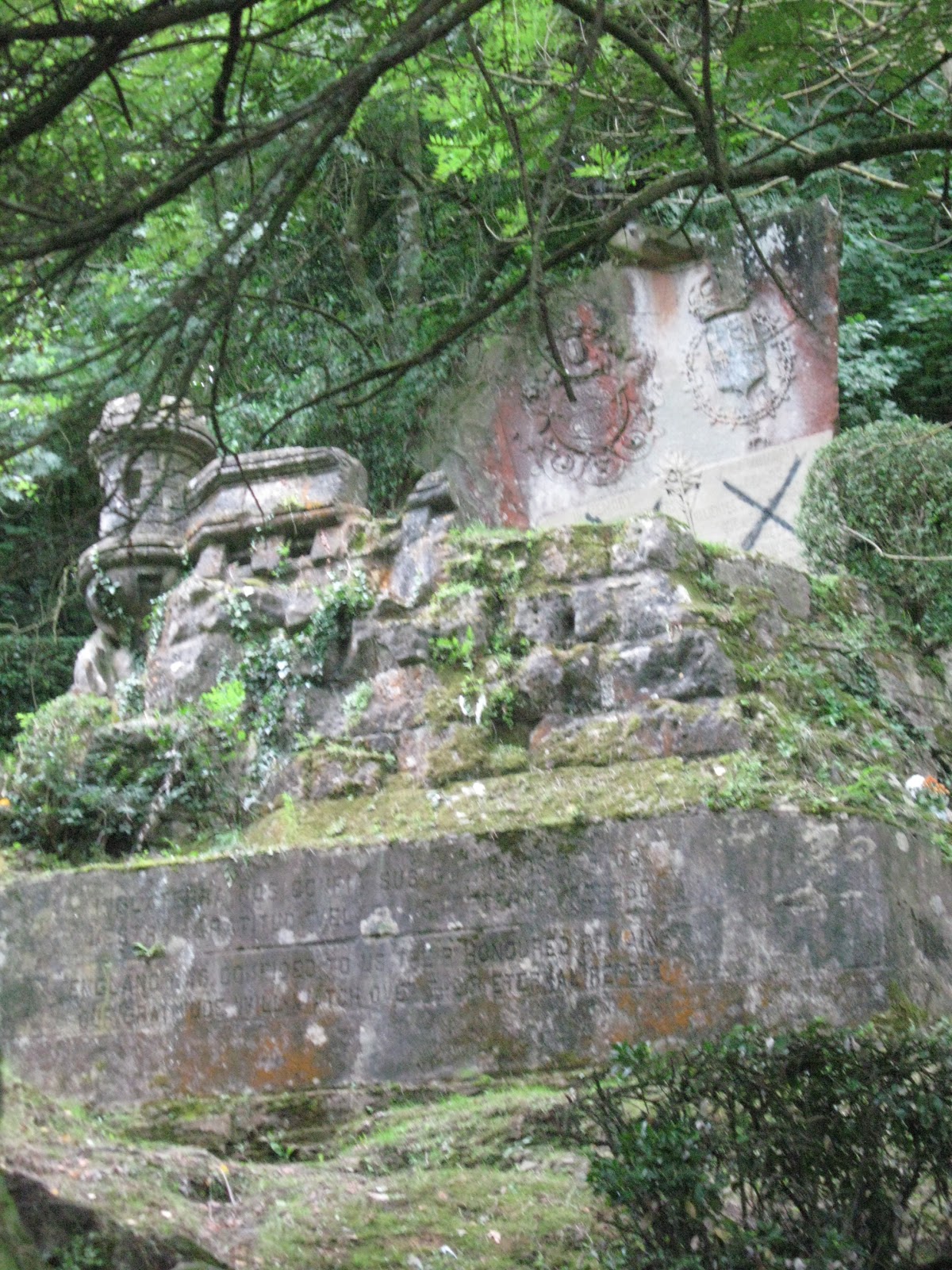
On the way up we found an interesting English cemetery (from the "Carlist wars" - yet another piece of history I need to look up).
After finishing up with Jesus, we hiked back down and walked across the beach, eventually getting to these cool iron sculptures at the opposite end of the beach. While walking across the beach Erica decided it would be cool to prance....
And the cool iron sculptures were placed among rocks and things we could climb around. The people standing on the beach thought we were crazy by climbing around on the rocks, but it was perfectly safe. 

the evening

Once it got dark, we were ready for a tour of the "food capital of Spain." Thank goodness Ekavali was with us, because she knew exactly where to take us! 

We had delicious tapas - oxtail, bacalao (fish), squid, mejillones (mussels), and many many more! Although the portions were small (they come in the pinchos variety), it was very very filling. 

In the Basque Country, the portions of food that are standard are pinchos (spelled pintxos).  It is in fact the same word, since the tx in Basque makes the "ch" sound. What this means is a piece of bread with a small item of food, usually ordered with a drink and to share among many people. 

After having the pinchos here in San Sebastián I think most of the pinchos I've had in Madrid were put to shame.

San Sebastián part 2 coming soon....

Saturday, July 14, 2012

the Alhambra

The walk from our hostal to the Alhambra was a straightfoward 25 minute stroll. We had been told that the walk was a miserable one uphill and we should take a bus. But we weren't in a hurry so we decided to brave it. 

The walk took us through a pleasant park, and while it was up a hill, it wasn't unpleasant because it was mostly in the shade. 

history

The Alhambra has a rich history that anyone can Google and read about, so I'll give you a quick rundown:
  • Built in the 1200s sometime by the Moorish kings and sultans and was a stronghold of Moorish power in Spain. The Moors (or should I say the "Moops"?) basically held power until they were kicked out by the Christian kings in the late 1400s.
  • At some point during the Christian Reconquista (around 1492), Carlos V captured the Alhambra and built his own palace there to live in. 
  • Spanish kings used this as a residence until Napoleon used it as a garrison for his troops in a campaign in Spain and completely trashed the place. 
  • It was restored and used as a tourist attraction.
As a result, there are 4 main things to see: the military garrison-tower, the palace of Carlos V, the Palacios Nazaries (the Moorish royal palace), and the Generalife gardens.

tickets

Everyone says to buy tickets for the Alhambra in advance - I would agree. If you already have your tickets, you don't have to wait in the ticket line and risk not getting any tickets. When you buy tickets, it gives you a time during which you can enter the Palacios Nazaries. The rest of the ticket gives you general admission to the entire complex, but the only timed section is for the Nazaries. If you have a morning ticket, you can enter in the morning and stay as long as you like as long as you don't leave. We had afternoon tickets, which means you can enter any time after 2pm and stay as long as you like. 

Because our Nazaries reservation was at 3pm, we had time starting at about 2pm to walk around the Palace of Carlos V first. 

Palace of Carlos V

It reminded me a bit of the Colosseum in Rome, and you can see why. 
But we had some time, so we took our time, looking at the free Museum of the Alhambra as well (a few artifacts of Moorish art, nothing too spectacular) and experimenting with Robin's autotimer to take a picture of us. 
Alas, Robin has the picture of us, so when I get it and the link I'll post it here =). 

Palacios Nazaries

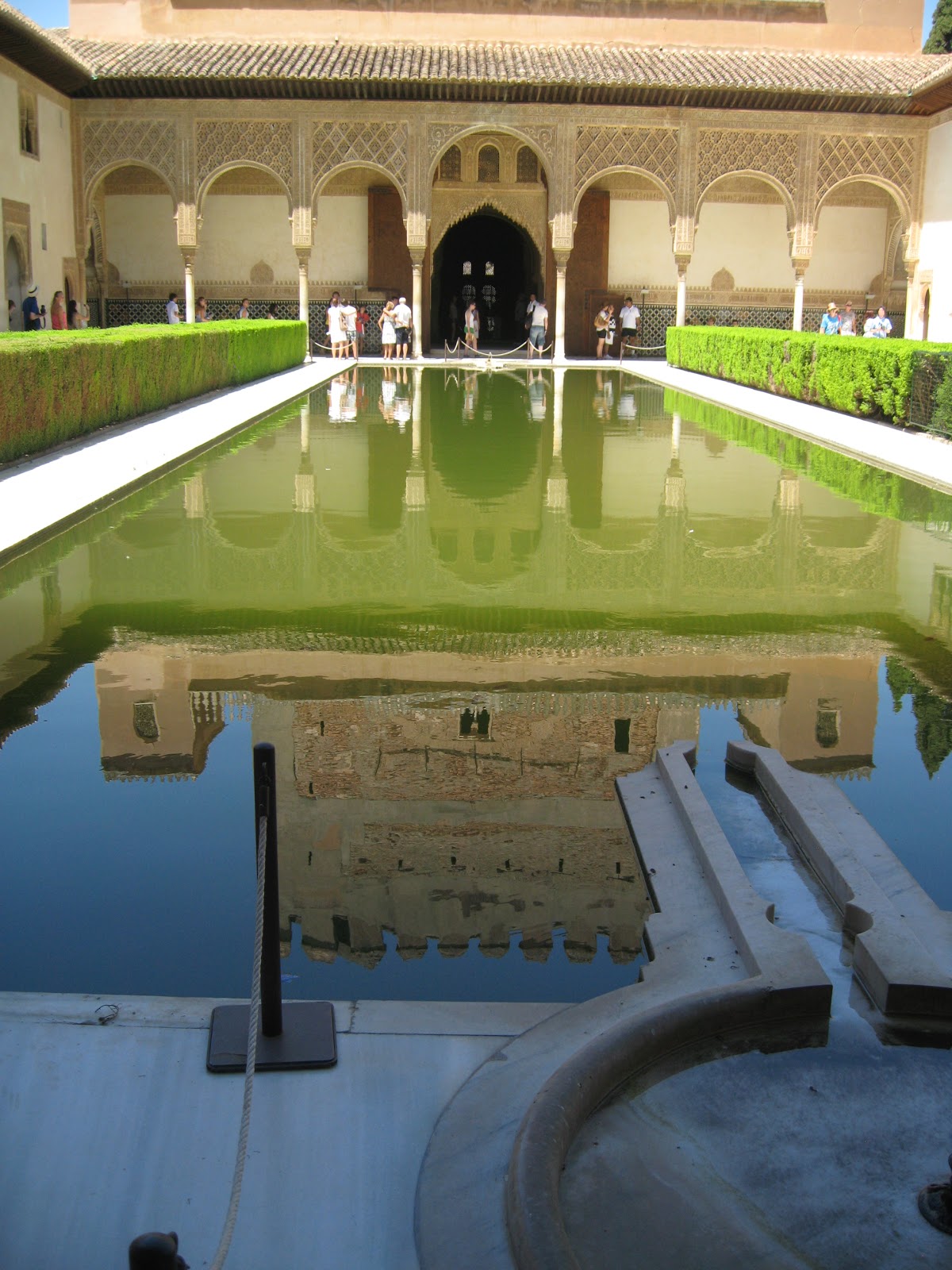
Were the most gorgeous part of the Alhambra. I'll just post a few pictures, because they speak louder than words. 


You can see the rest of the photos on mine and Robin's Flickr albums. But my favorite photo is the creation of this new art form - seeing sights in the reflection of someone else's sunglasses

the stronghold tower

Has some pretty cool views of the Albaycin from the top, and some pretty cool flags. 
 This is the view of the tower you go on top of.
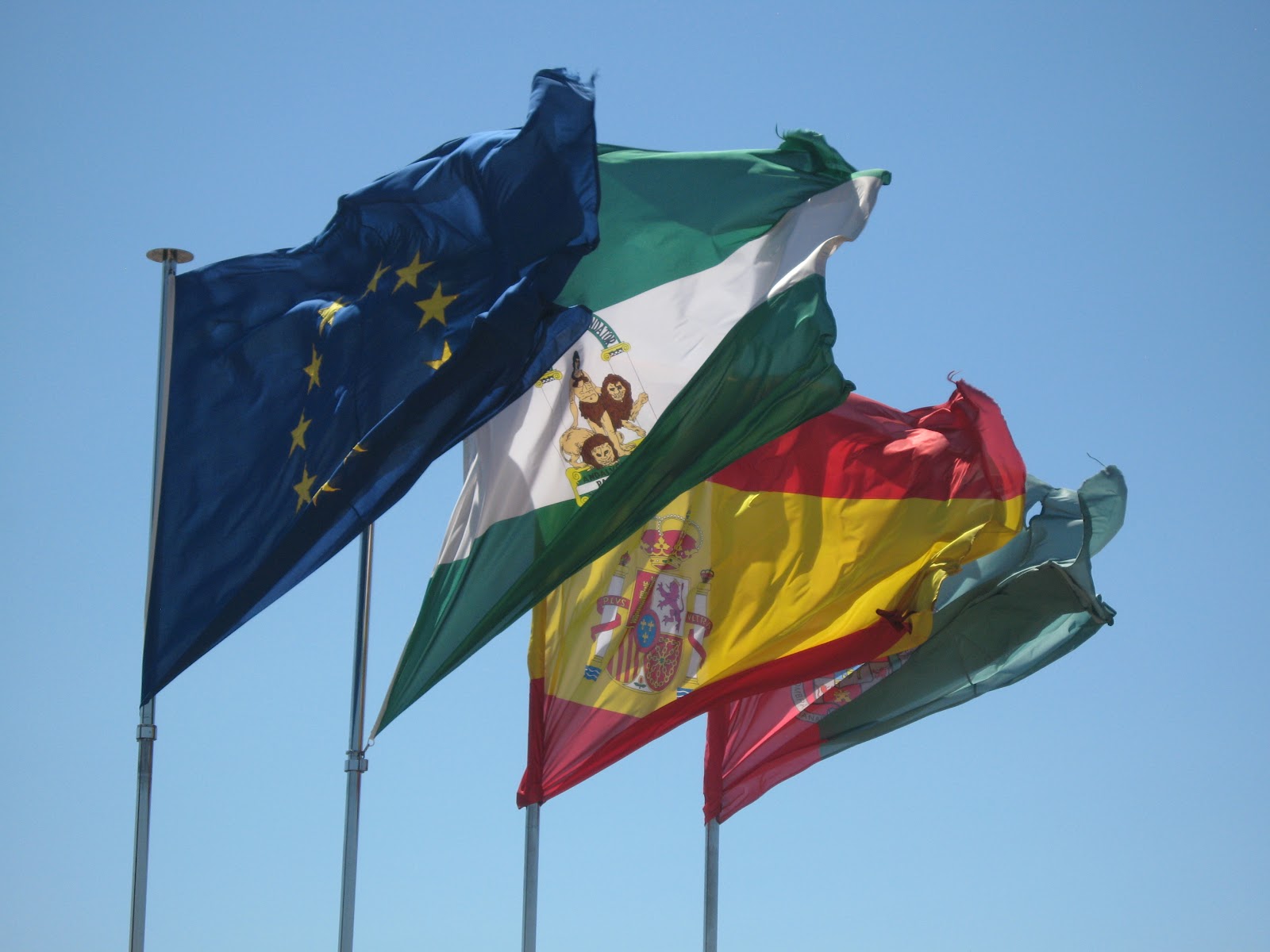
And the four flags that fly at the Alhambra - the EU, the Andalucía regional flag, the flag of Spain, and the local flag of Granada. 

Generalife

Is not actually pronounced "General Life." It's pronounced "hénéraleefay", and are some pretty gardens. It's a nice place to walk around and cool off in the shade while munching on the remnants of lunch before heading back to the hostal for a siesta! There's also a Moorish sultan's small house there, supposedly one he used as a retreat from the rest of Moorish society to enjoy his gardens. 

in general

Everyone should visit the Alhambra if they get a chance. It is the most gorgeous structure I've ever seen in Spain. 

Saturday, June 30, 2012

Plaza Mayor and Puerta del Sol

Now that you're oriented with the city of Madrid, you might be interested to see Plaza Mayor and Puerta del Sol at day and night. 


Plaza Mayor during the day:

and at night:


And the same for Sol. During the day:
and at night:
Notice how the cool of the evening brings out many more people into the Plazas to enjoy what Madrid has to offer.

basic Madrid geography

I've been mentioning different parts of the city in my blog posts and I realized that people who are not familiar with Madrid just glaze over and ignore. So this will be an attempt to explain some basic Madrid geography, to get you oriented to the city without having lived here or even visited. 


Here's a basic map to get you oriented with an attempt at making the scales appropriate:


But after living here for a bit, I have this caricature map in my head:


As for which is "correct": well, beauty is in the eye of the beholder, right?


I know that some items are not consistent between the two maps - there's a reason why one is labeled as more correct scale-wise than the other. The main difference is that Puerta del Sol is HUGE in the caricature map - the reason for this is that it seems that no matter where you walk in the city, you will always hit Puerta del Sol. If you meet there before going out for the night, you will invariably come back to it again. Guidebooks say to go there because you can find everything you need in Madrid starting there. That's definitely true, but you should always explore other areas. It's central, very touristy, but also a good landmark.


A one-sentence blurb about each of the map components, in order from most common to least common:

  • Puerta del Sol - the hub of activity in Madrid. It is the actual center of the city, the tourist center of the city, the food center of the city, and the metro center of the city. All roads lead to the Puerta del Sol, and if you meet people here you will invariably be at a good place to start an evening of fun.
  • Plaza Mayor - the second nearly-adjacent-to-Sol hub of food and tapas
  • Gran Vía - the "broadway" of Madrid, separating the Puerta del Sol area from the north area. Below Gran Vía is very touristy and generally more expensive. North of Gran Vía is generally more residential and a bit cheaper. 
  • Chueca - Madrid's gay district. It's really only a few square blocks, but it has some nice bars and tapas places. Sam, Cristina, Lucas, Will, and Carlos live there.
  • La Latina - cheap shopping area with lots of good tapas places, a street of all-hiking-and-camping-gear stores, and holds El Rastro on Sunday morning.
  • Lavapiés - the "ethnic" part of Madrid, with a Senegalese ghetto, a Chinese ghetto, an Indian ghetto, and probably more ghettos that are distinct but that I can't recognize.
  • Parque del Retiro - a huge park (think Central Park). retiro literally means "retirement", but it is meant to mean relaxation. Lots of locals and tourists alike just relaxing and enjoying the nice weather.
  • Atocha train station - most trains coming to Madrid from other cities arrive/depart from here. It's at the southeastern tip of the Madrid that most tourists will see. Very close to the Prado and Reina Sofía museums.
  • Moncloa - very university-student-heavy region, with lots of university students renting apartments there, since it is very close to a number of different universities. 
  • Plaza de España - has a statue of Don Quixote, some pretty buildings, and signifies the end of Gran Vía. Adjacent to the Templo de Debod, a common botellón location. 5 minute walk from my apartment. Evelin, Sophie, and Mary live very close to it.
  • Palacio Royal - the Royal Palace. It's pretty.
  • Chamartín train station - trains going to some cities. Need to go here to make reservations on trains with my Eurail pass. Takes a long time on the metro...
  • My work - near the Gregorio Marañon metro stop, a bit closer to where I live than Chamartín but on the same metro line. Cecily and Lionel live close to it.
  • Bulderking - an only-bouldering gym that I determined to be the closest to my apartment